
When We Make It: Influential Literature for Cultural Recognition
- Britney Cordero
- Mar 7, 2025
- 6 min read

Updated: Apr 3, 2025
"When I'm not writing, I am living the life I want to write about." - Elisabet Velasquez
Modern literature can be difficult to appreciate when many books that the youth are exposed to are forced upon them through education.
Textbooks, essays, and more gradually strip literature of the authenticity it once used to inhabit both through the perspectives of a reader searching for purpose and the perspective of literature created purposefully.
Due to the habits created by the education system, it can be demanding for the youth to find a book that triggers a spark in them, a book that is relevant and relatable, a book that has purpose.
Author and poet Elisabet Velasquez created a piece of literature known as When We Make It that captures the attention of the youth from its root.
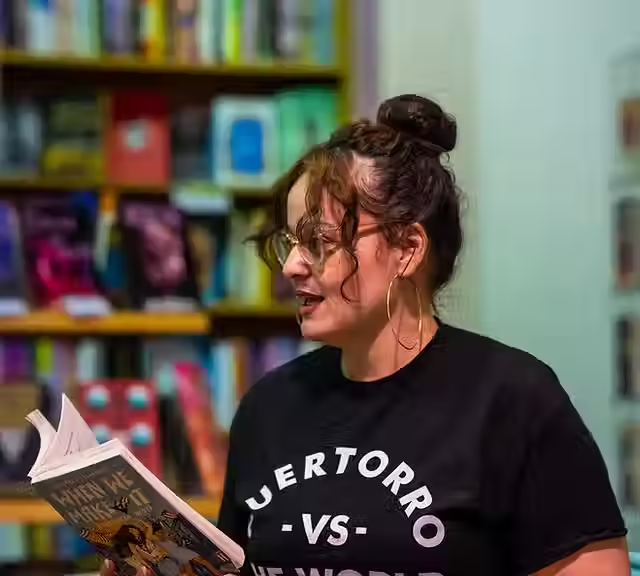
Who Is Elisabet Velasquez?
Elisabet Velasquez is a first-generation Puerto Rican born in the United States.
Residing in Bushwick, Brooklyn for much of her life, Velasquez encounters several extreme financial, emotional, and residential conflicts through her youth including severe financial instability, homelessness, and poverty-induced hunger.
It's easy to assume that living in such an environment would limit one's creativity, one's hope, and one's ingenuity. However, Velasquez continues to view her hometown as neighborhood lit alive by the innovative and vibrant souls of its residents.
Velasquez uses When We Make It as a poetic expression of several struggles that she has experienced herself and that are experienced by many Puerto Ricans raised and/or born in the United States.
Personal Connection
To summarize, the novel in verse details the life story of Estrella, a young Puerto Rican girl growing up in New York who is not only learning about her cultural identity, but learning to navigate her day to day struggles as an adolescent growing up below the poverty line in Bushwick, Brooklyn.

Throughout the novel there are several instances where Estrella doubts her identity as a Puerto Rican due to her broken Spanish, the fact that she's never visited the island, and the constant questioning of her own identity from other Puerto Ricans.
Estrella experiences so much shame in herself and broken language that she struggles to communicate in Spanish with her own family, specifically her grandmother living in Puerto Rico.
It was these moments, moments of cultural insecurity, moments of self doubt, and moments of desperation for a sense of home that resonated with me the most.
On a more personal note, I am also a Puerto Rican born in the United States and I didn't grow up speaking Spanish, it wasn't necessary to me.
It wasn't until 8th grade that I started to learn Spanish in school.
I always felt a bit awkward, a bit out of place being one of the very few Hispanics learning Spanish in a majority white middle school, and that insecurity was only enhanced in Spanish class.
I remember staying up alone late at night on my laptop zooming through Duolingo exercises with J Balvin blaring so loud in my headphones you could hear its echo from another room.
I started to gradually fall in love with my heritage and continued to study Spanish, however, my perception of Puerto Rican culture became greatly tainted once I reached high school.
I became a student-teacher and I started to teach English to immigrants who came to my high school with limited language proficiency in an ESL (English as a Second Language) program.
I was so excited to get involved in the community and reconnect with my heritage and practice the Spanish language with native speakers, and I would get the opportunity to do all of that but it would not be without great struggle.
As soon as I sat down in that room for the first time the question that I now dread was asked, "Where are you from?".
Me having to explain that I am not a native Spanish speaker, I'm still discovering my culture, and that I wasn't even born in Puerto Rico felt like I was being stripped of my cultural identity with every nullifying detail of me existence escaping my lips.
Just me having to explain my identity felt invasive and invalidating.
Throughout the year when new students joined the class the same question would get asked and I would only feel more and more embarrassed knowing that these people I am surrounded with did not consider me to be Puerto Rican even though I have always represented my blood with never-ending pride.
I would endlessly hear laughter towards my broken language or people neglecting my culture because of the way I spoke Spanish. It broke my heart.
I was so proud of how far I've come from zero, even my family was proud of me, but I was always ashamed of my voice and my language because it was broken, because it wasn't natural, because it didn't feel mine.
What was once pride turned into hatred towards my culture. I took off the Puerto Rican flag from my wall and folded it away as a good memory.
I remember helplessly bawling as I texted my best friend, telling her that I wish I was white.
It was the worst kind of hatred I experienced, it was more than skin deep, it was hatred of my own identity to the bone.
It felt like I was trapped in my own body. I couldn't escape my physical appearance that was carefully created to resemble that of my ancestors. I couldn't escape the impulsive perception of others. I couldn't escape myself and my own doubts about my identity.
One day I was studying in Barnes & Nobles with my sister and I came across a colorful book decorated with the Puerto Rican flag, titled Y Si Lo Logramos.
After reading the description I bought it in an instant. When We Make It ended up being the first book I've ever read in Spanish and I couldn't help but feel like the book was made for me.
It was so beautifully articulated and I couldn't shake the fact that some of the exact experiences that Estrella had were the same as to what I had experienced and that I knew many people were actively experiencing.
I ended up sharing the book with one of my closes friends, the daughter of a Lebanese immigrant, and I was so glad to see that the story struck her heart as much as it did mine.
Importance in Culture
With more Puerto Ricans living in the USA than in Puerto Rico, the culture is currently experiencing the effects of a diaspora.
This means more Puerto Ricans without the language and less Puerto Ricans experiencing the island itself.
Due to colonization and the diaspora, Puerto Rican culture has evolved into a melting pot of diversity in language, birthplace, and cultural expression.
However, amongst the youth this diversity is commonly seen as a disadvantage and even an insecurity.
Such doubts lead to great cultural disconnect and even a sense of resistance for those feeling rejected by people of their own culture.
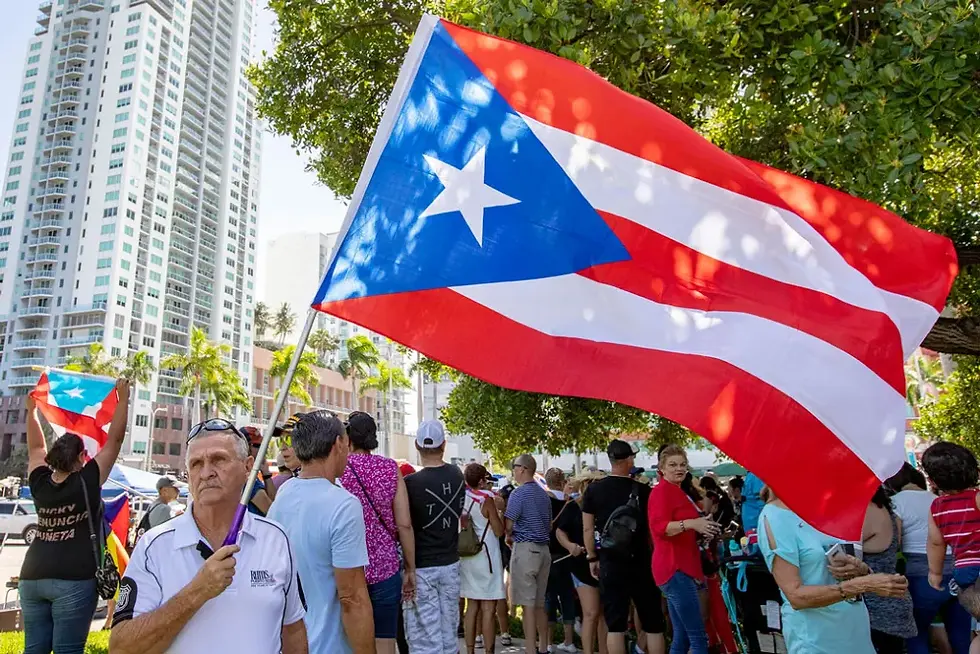
When We Make It articulates the emotions that not just Puerto Ricans, but many second-generation immigrants face when learning to embrace their own culture.
This book is a precise example of how literature can be used to reach the hearts of the youth in an age where the use of literature is often forced.
The point that I want to make with all of this is that identity is something very personal that has no right to be determined by another individual.
In the midst of a diaspora, cultural disconnect is inevitable, however, it is far from a disadvantage.
Reconnecting with one's culture creates an intentional outward manifestation of the resistance, bloodshed, and perseverance of generations of ancestors and is nothing to be ashamed of.
The literature of Elizabet Velasquez is a reminder that much beauty lies simply in the desire to rediscover one's heritage and perhaps, if that little spark is fueled it is capable of creating a blaze of pride, knowledge, and comfort in one's identity that consistently burns in vitality through generations.
If interested in learning more about Elizabeth Velasquez or her book When We Make It, I would highly recommend you to check out her website where much of the information in this article was sourced from.
@HeritageHubbc does not claim possession of any photos or sources used within this post.

Comments