
Nairo Quintana: Powerful Voices in Cultural Revival
- Britney Cordero
- Mar 7, 2025
- 5 min read

Updated: Apr 3, 2025
In the enchanting hills of modern-day Colombia once thrived a society known as the Muisca people, also known as the Chichbas.
This indigenous group found in Altiplano Cundiboyacense, Colombia created a lavish, intricate agricultural society that contributed greatly to their prosperous civilization.
Undoubtedly, the Musica people followed a very intricate religion. Like many Indigenous cultures in Latin America, the Muisca people followed a religion that is spiritually centered in nature.
It was believed that there are several Gods that are to be worshipped, with one creator God, named Chiminigagua. Additionally, the Muiscas lived in a hierarchal society with a cacique (chief) and were also engaging in several networks of trade with neighboring indigenous communities.
In fact, the Chichbas were known for their possession and importance of gold. Not only was it a form of currency, gold was used for religious offerings as well.
Actually, the fascinating legend of El Dorado, the city of gold, was created by the Muiscas.
This short summary cannot capture the vibrancy of Muisca culture, that of which was snatched way too soon. The 16th century was filled with horrors for the Muiscas.
These horrors include enslavement, brutal torture methods, and destruction of sacred sights, which all contributed to the extreme diminishment of the culture. Not to mention, many Muisca people faced forced conversion to Christianity due to colonization.
Because of this, a lot of Muisca culture remains a mystery eager to be revealed. Muisca culture can be compared and contrasted to other indigenous societies in Latin America, such as the Aztecs, Inca, and Taino due to its spirituality, trading networks, and much more.
For example, Muisca culture contrasts from Taino culture in the aspect of their way of obtaining food. The Muisca were agriculturalists whereas the Taino were horticulturalists, however, the Muisca would be able to relate to the Aztec in this way as the Aztec also created an agricultural society.
Like many other indigenous cultures in modern day, the people struggle for recognition and reclamation and preservation of their identity to show that they still exist and that they are still here.
Reclamation of indigenous cultures in Colombia has been expressed in several ways, including preservation of indigenous last names, opening of museums to display native artwork and structures, and the sharing of cultural legacies, values, and history to surrounding communities.
Indigenous advocacy couldn't exist if it weren't for individual effort. When it comes to an issue of cultural preservation, every voice counts, especially yours. And this is proven by Nairo Quintana.
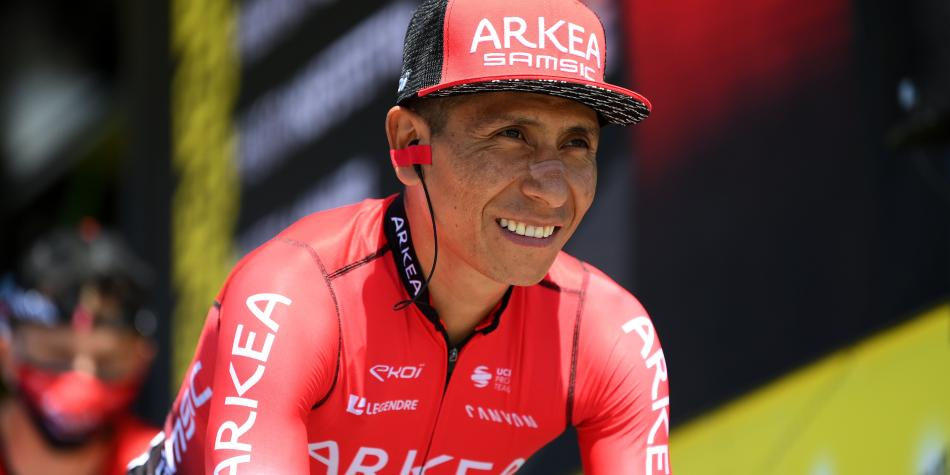
Quintana is one of the best cyclists in Colombian history and had very humble beginnings starting in a village named Vereda La Concepción.
When growing up Quintana's parents often struggled to afford services that many of us take for granted, this included things as simple as sending Quintana to school on a bus. Because of this, Quintana's father had to by him a bicycle as a form of transportation with a price tag of $30.
He cycled his way to school everyday, and it became an activity that triggered Quintana's imagination.
He used to envision himself in an intense race where he would often end up the winner, as he pedaled faster and faster. With such a background, it would've seemed impossible for Quintana to achieve the lifestyle he lived in his daydream, however, that is exactly what he did.
Some of Nairo Quintana's biggest accomplishments include winning the 2014 Giro d'Italia (first Colombian to win, his win of the 2016 Vuelta a España, and 2nd place in Tour de France and much more.
Nairo Quintana is of Music descent and has proudly claimed his heritage in even his highest moments of fame. Quintana states after his win of the 2014 Giro, “I don’t come from some lost little village in the mountains. We don’t live in the jungle,” in regards to his background.

In regards to his economic struggles when young he states, “We were never rich, but we never were for want of something.
That’s the ignorance of people who do not know what exists on the other side of the world.” Quintana continues to advocate for recognition of his people as he continues his cycling journey.
Indigenous advocacy in the media is crucial to the preservation and reclamation of marginalized communities. For hundreds of years indigenous communities have been silenced, oppressed, ignored, and shunned; leaving much of the indigenous excellence around the world overlooked.
By using our voice, by creating content, and by rediscovering and sharing culture with surrounding people and communities we are capable of not only bringing awareness to the general public of the suppressed suffering of indigenous peoples, but we are capable of inspiring the indigenous youth to rediscover their past and find communities where their identities are valued.
By advocating, we can ensure that indigenous history, languages, and accomplishments are not ignored, but rather preserved and admired for future generations...and it all starts with a single voice.
Figures like Nairo Quintana show us that something as "little" as a voice, is really not so little.
Rather, speaking up for your heritage has a ripple effect and Quintana's success and advocacy bring attention to not only the struggles, but the simple presence of Muisca people in modern day; proving that indigenous heritage is not an ancient relic, but a living and evolving identity.
By not taking action, we contribute to the problem and assure that native history continues to be silenced. Embracing nativity is essential to understanding our origins and forming solidarity in humanity. Without indigenous voices, we lose one of the most vibrant, resilient, and influential parts of human history.
HOW TO ADVOCATE:
- Educate yourself, read books by indigenous authors, research indigenous history, watch documentaries (Check out...
or https://indigenousafrica.org/ to start your research!)
- Share content made by indigenous people online
- Support indigenous businesses (Online Native-Owned Businesses: SheNative, Sage & Oats, Bison Naturals, etc.)
- Research which indigenous group is living on the land you reside in
- Participate in local pow wows, festivals, and cultural heritage days (Indigenous Peoples Day/Month)
- Support campaigns that preserve indigenous land (https://www.change.org/t/indigenous-land-en-us)
- Use your vote!
- Donate (if not financially, donate clothes, food, etc. and spread awareness!) to local indigenous organizations
Sources Used:
ArepasDelGringo. “The Muisca (Chibcha) People of Colombia: An Overview.” ArepasDelGringo, 10 Jan. 2023, arepasdelgringo.com/the-muisca-people-of-colombia-an-overview/#google_vignette.
Holmes, Tamlyn. “Matching-up the Muisca Past and Present: Virtual Cultural Heritage.” SDCELAR | Latin America at the British Museum, 14 Feb. 2024, www.sdcelarbritishmuseum.org/projects/matching-up-the-muisca-past-and-present-virtual-cultural-heritage.
Hood, Andrew, and Andrew Hood. “Nairo Quintana’S Legendary Journey From Rural Colombia to the WorldTour.” Velo, 15 Feb. 2021, velo.outsideonline.com/road/road-culture/nairo-quintanas-legendary-journey-from-rural-colombia-to-the-worldtour.
Ospino, Luis. “The Muiscas: Ancient Indigenous Civilization of Colombia.” Colombia One: News From Colombia and the World, 17 Oct. 2024, colombiaone.com/2023/06/28/muiscas-colombia.
Reports, Colombia. “Nairo Quintana.” Colombia News | Colombia Reports, 28 Aug. 2019, colombiareports.com/amp/nairo-quintana.
@HeritageHubbc does not claim possession of any photos or sources used within this post.

Comments